Landscape Photographer does Street Photography
Table of Contents
Video
Intro
I’ve written before about my reluctance to photograph people. I don’t enjoy the process, but that says more about me than it does about the genre, I’ve photographed people formally and informally, professionally and otherwise. I got results, but I can count. on the fingers of one thumb the number of shoots I’ve enjoyed! That being said I know some wonderful people photographers and I sat down with one, Brighton Photographer Jerry Webb for a few beers and a natter when I was in Brighton recently. Jerry will be leading a street photography workshop I’m hosting in Granada this year – sign up below this article if you want to know more about that.
In the meantime read on to find out what happens when a landscape photographer does street photography!
The Joy of Photography
One thing that makes photography such an interesting occupation is the fact that professionalism does not speak for all photography. There are some who insist that getting paid is the marker for success and that not getting paid makes your photography less significant. I may have subscribed to this view myself a few years ago, it is certainly good to be paid for doing something you love, but actually in photography, skill and the ability to communicate, not money is the benchmark of success.
In no other occupation that I can think of, is this true. I’ve never come across an amateur accountant for example. Amateur lawyers are ten a penny in every pub but photography is unique in that there are several genres of photography that don’t generate vast amounts of money and have never generated an actual living wage except for a very small minority of people. Landscape photography is one, Street photography is another.
Don’t misunderstand me – by a living I mean generate enough money to live, pay your taxes, buy new kit and so on. Freed from that responsibility by advancing years, I’m a lot more open minded than I was. I still get commissions, but I feel freer somehow, to do the work I want to do.
Putting that to one side, I’ve found that the skill levels in these unprofitable niches are often very high, put bluntly I have a lot to learn, especially in the realm of street photography. But also in landscape photography, I’m constantly looking for ways to improve my technique. That’s part of the joy of being a photographer.
The Dunning Kruger Trap
One of the things that I’ve found very entrenched in photography is the Dunning Kruger Effect. My own included! Put simply, Dunning & Kruger suggested that the phases of learning in a sense mitigate against further learning.
“Those with limited knowledge in a domain suffer a dual burden: Not only do they reach mistaken conclusions and make regrettable errors, but their incompetence robs them of the ability to realize it,”
Think of it like this – If I know very little about a subject and I decide to focus on it and improve, if I apply myself I will have a breakthrough at some point. The new knowledge, because I knew so little, seems immensely significant and there is a tendency (this is what most people understand by the DK effect) to consider it “job done” and expound my new knowledge as expertise. This stops me progressing.
In the bigger picture, there are more mountains to climb, it’s simply that knowing so little in the first place, I couldn’t see what I didn’t know and chose to embrace my new knowledge instead of investigating further. This is not just true of photography by the way!
Understanding Aperture – job done! I’m an expert!
Understanding Leading Iines – job done! I’m an expert!
We see this all the time in photography, people expounding absurdities as if they were the sermon on the mount. I’m sure I’m as guilty as anyone, fact checking my own videos is a big part of the production process.
So with that in mind, let’s see how I got on with a day of street photography in Granada this week.
Street Photography in Granada
I took with me a small mirrorless camera, the Canon G1 x III, it’s inconspicuous and people don’t really notice it. I disappear into the crowd quite nicely.
Now there are some things about street photography and the way that I approach it, requires very little technical expertise, but it does require noticing details in a fast changing environment. In this sense it has a lot in common with bird photography (Another thing it has in common is that I know even less about bird photography as I do about Street Photography!)
My most comfortable method of working is to choose my frame and then wait for the right person to walk into it. I’m not a natural people person so the Bruce Gilden method of getting in close would for me represent a potentially life changing risk!
You can do this with Zone focusing ie prefocus on the spot you want your subject to be in, allowing for depth of field, so set a reasonably deep aperture but not so deep that your. subject disappears into the urban hubbub. I chose f/9 for these shots. The Canon G1x is not set up for back button focus so that is a non issue for me.
One of the things I discussed with Jerry was what makes a great street photograph and his view was that in addition to getting your environment sorted out and having the right aperture and focus, you need somebody to do something extraordinary. That moment is the difference. Now, something extraordinary doesn’t have to be doing cartwheels or back flips, it can be wearing a color that perfectly matches or stands out from the background, catching the light in a certain way. It’s recognising the potential that makes a good photograph. All three of those points would make a great photograph!
My First Street Photograph
Was of a street. That’s how little I knew and I’m not remotely embarrassed by that admission, in fact apart from the fact the photograph was devoid of interest, quite badly framed and displayed very few redeeming features, I think it was a good start!
Look at it like this.
You need to do the fundamentals well. Otherwise your successes will be random, unrepeatable and you won’t learn anything. So here’s a suggestion for doing things my way. It’s not the only way and I’m sure there are other ways that work just as well, but this works for me. It took me years to settle on this method and I suggest if you haven’t already, work out your modus operandi. Firing random shots doesn’t yield good results very often.
Visualise the Shot
By this I mean find your scene and make the frame. Work out where your subject is going to be, Work out what you depth of field is going to be. Get everything about the photograph set up then leave the decisive moment to chance.
Wait

I waited for several hours before getting this shot and to be honest that was a day wasted. Although I do like this photo, I think half an hour maximum, you can probably tell by the frequency of people passing through the frame whether you have a good chance of getting the shot after about ten minutes. I may very well call this the Ten Minute Rule and remind myself of it from time to time.
Take Multiple Shots
I have sometimes used burst mode to fire off multiple exposures because there can be a huge difference in something as innocuous as where the front foot is in relation to the pavement. You can’t focus on that in the moment because it’s only a supporting feature but it can make or break your photograph. This is an option, purists might not like it but this is street photography, anything goes!
Be Ruthless in the Edit
An average photograph is basically a snapshot. If you take your photography seriously, don’t post snapshots on social media! My day in Granada yielded two definite keepers, a couple of near misses and a pile of undiluted rubbish. I was happy with that believe it or not!
What Worked
On this trip I was much more aware (thanks to Jerry’s remark) of the importance of the moment and I took rather more care than I usually do to nail it. It made a big difference.
What Doesn’t Work
I was so taken with the pictures I chose to keep that I experienced a small Dunning Kruger moment – and that is the real danger in photography and indeed any art form – if you think you’ve mastered something you’re probably wrong and the way forward is to be really honest and work out how your photograph could be better.
Critique of Granada Photos

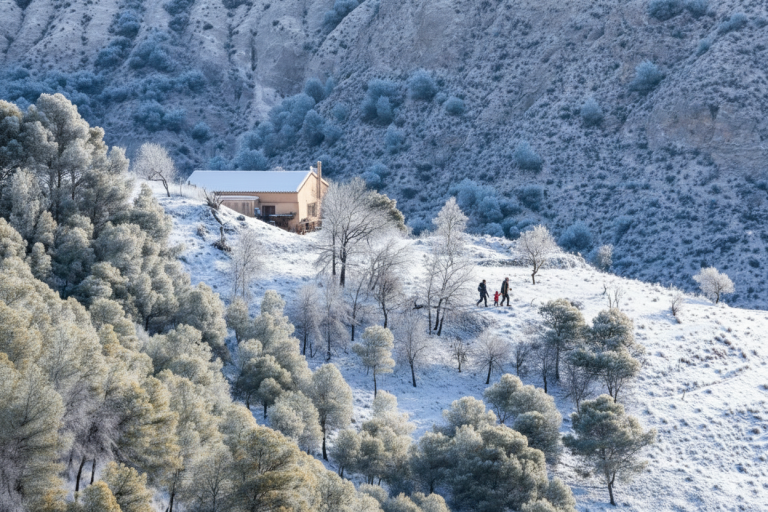
The first thing to talk about is the light. It was exceptional on the day and once I’d go going I found myself looking primarily for the light as well as the scene. This was taken later in the day and I’d realised while looking at the beautifully vivid building that the light would cut across anyone walking down the hill. I waited about fifteen minutes to get this shot. A definite keeper,
It took me a while to get going, but once I got in the zone so to speak it started to come together quite well.

The first hour in hindsight was getting things out of my system and finding ways to use the light. This picture I was trying to get silhouettes. that worked, shooting straight into the sun. This was the best of a bad bunch, nothing really interesting going on in the frame. This I would normally throw away. I find with street photography it takes me a while to warm up, to connect with the street.

My favourite photograph was taken as I walked back to the car park. I literally walked past the glass doors to St Augustin market and did a double take. Walked back, went inside and took two or three pictures. What I like about this image is the light, the reflections on the polished floor, the way the light strikes the man with his back to the camera having coffee at the tables.
There was a bit of negative space at the left of the picture and that caused me some back and forth in the edit. In its favour it balances out the semi lit area on the right, but maybe a tighter crop..

So where do I think these pictures could be better. Well, the two keepers, the yellow wall and the blue bar – the first might have been improve on if I’d waited and given myself some better choices.
The second, the light is beautiful and I think both crops work, but again, there is nothing exceptional going on in the image. I needed a girl in a yellow or light orange top to get the contrast against the blue bar. A little more time might have presented that opportunity.
The lesson here for me is that I noticed the light and worked out how and where to use it effectively. Next step is getting that decisive moment. Patience!
Subscribe…
I’ll keep you in the loop with regular monthly updates on Workshops, Courses, Guides & Reviews.
Sign up here and get special prices on all courses and photowalks in 2026