
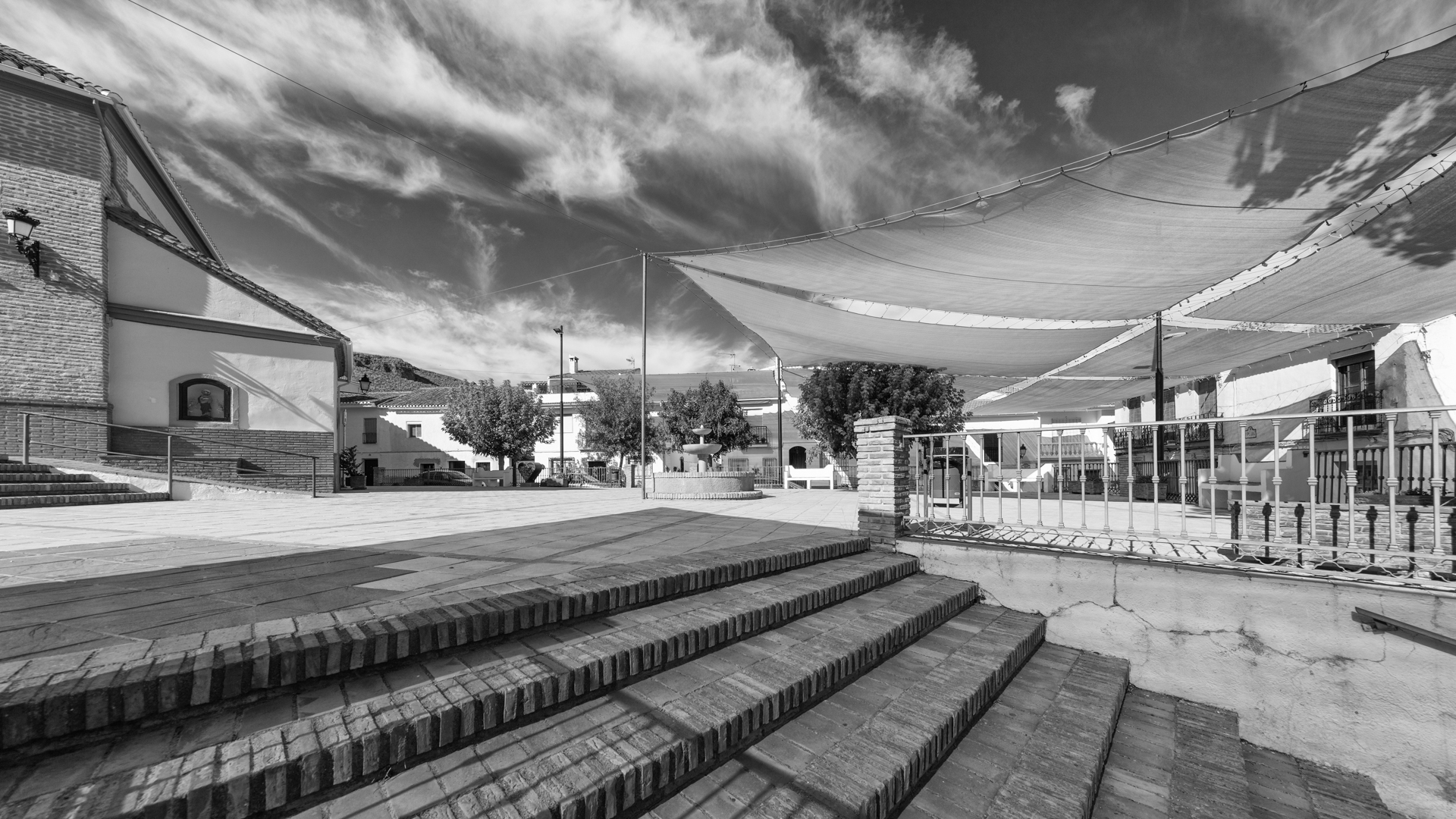
Canon EF 11-24mm
File under “guilty pleasures”, I’ve acquired a Canon EF 11-24mm after suffering many years of acute lens envy. I got mine in excellent condition, second-hand from MPB Photographic, at less than half the cost of new.
Table of Contents
So what is this lens for?

Purpose
The 11-24mm focal length is ultra wide, it’s the widest full frame lens that Canon make (or made) with the exception of the 8-15mm fisheye. What makes this lens special is the clarity across the frame and the lack of distortion compared to other wide angle lenses.
For landscape photography it allows the capture of a very wide shot from a comparatively short distance, without having to make a panorama out of several shots.
For architecture this lens will capture floor and ceiling, in fact be careful of your feet while shooting! Paired with a program like DxO ViewPoint to correct edge distortion it is a formidable addition to the architectural armoury.
My intention is to use it for both architecture and landscape photography. In fact I have a trip to Valencia in the diary so that I can photograph the City of Arts and Sciences.
Vital Statistics
Weight
41.1 oz or 1165g
This is a heavy lens, make no mistake.
Size
4.25 x 5.2” or 108 x 132mm
Special Characteristics
The large convex glass at the front of the lens is what is responsible for the excellent visuals, however it makes it impossible to fit a Lee Filter kit, as there is a fixed hood which protects the glass from accidental knocks or scrapes. The lens cap fits over the hood but leaves faint scrape marks on the hood where it grips. A small price to pay for an excellent lens.

Image Quality
Images are sharp and color is rich, contrasty and accurate. In these terms this is as good a lens as any I’ve owned from Canon and substantially better than the Rokinon SP 14mm I bought this lens to replace.
There is virtually no falloff toward the edges, no visible fringing or vignetting. RAW files produced with this lens are insane, in good light, practically ready for printing.
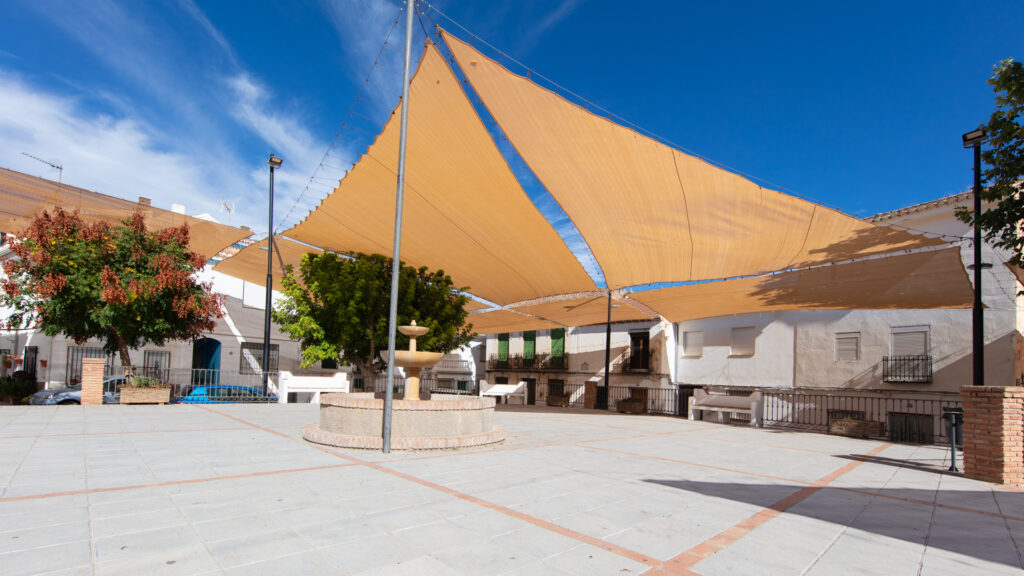
Distortion
Clearly this is an extreme wide angle and as such, distortion is inevitable towards the corners of the frame. You’ll see in the image above, that the brickwork on the right is vertical whereas the fountain is slightly off. (The pole is actually off in real life). I corrected to the distorted brickwork on the right as that is nearest the lens.
Composition

As with panoramas, composition with this lens is tricky. The art is to decide what to leave out as the coverage is so wide that it becomes quite difficult to compose a well balanced image. Be aware that cropping is your friend as it will also remove most of the obvious distortion from the edges of the frame.
Summary
I don’t know what magic Canon employed in this lens, but its ability to deliver near straight lines at 11mm borders on the supernatural. When you look at the engineering challenges involved it’s beyond supernatural. There are three aspherical front elements and a nine blade diaphragm.
At the time of release, February 2015, this was the widest rectilinear lens ever made. In October 2024, the Laowa 9mm f/5.6 FF RL has overtaken it, but at a quarter of the price and boasting only two aspherical elements, and by all reports suffering from most of the problems Canon eliminated in the 11-24mm this is a vastly inferior lens.
I’m absolutely delighted with this lens and am looking forward enormously to shooting in earnest.
Subscribe…
I’ll keep you in the loop with regular monthly updates on Workshops, Courses, Guides & Reviews.
Sign up here and get special prices on all courses and photowalks in 2026


