The Best Day: Kite Surfing in Tarifa
This week we went to the province of Cadiz to check out locations for a photography workshop next year. We stayed at Vejer de la Frontera and one of the highlights of the trip was a day spent on the beach at Valdevacheros shooting kite surfing in Tarifa.
Kite Surfing in Tarifa
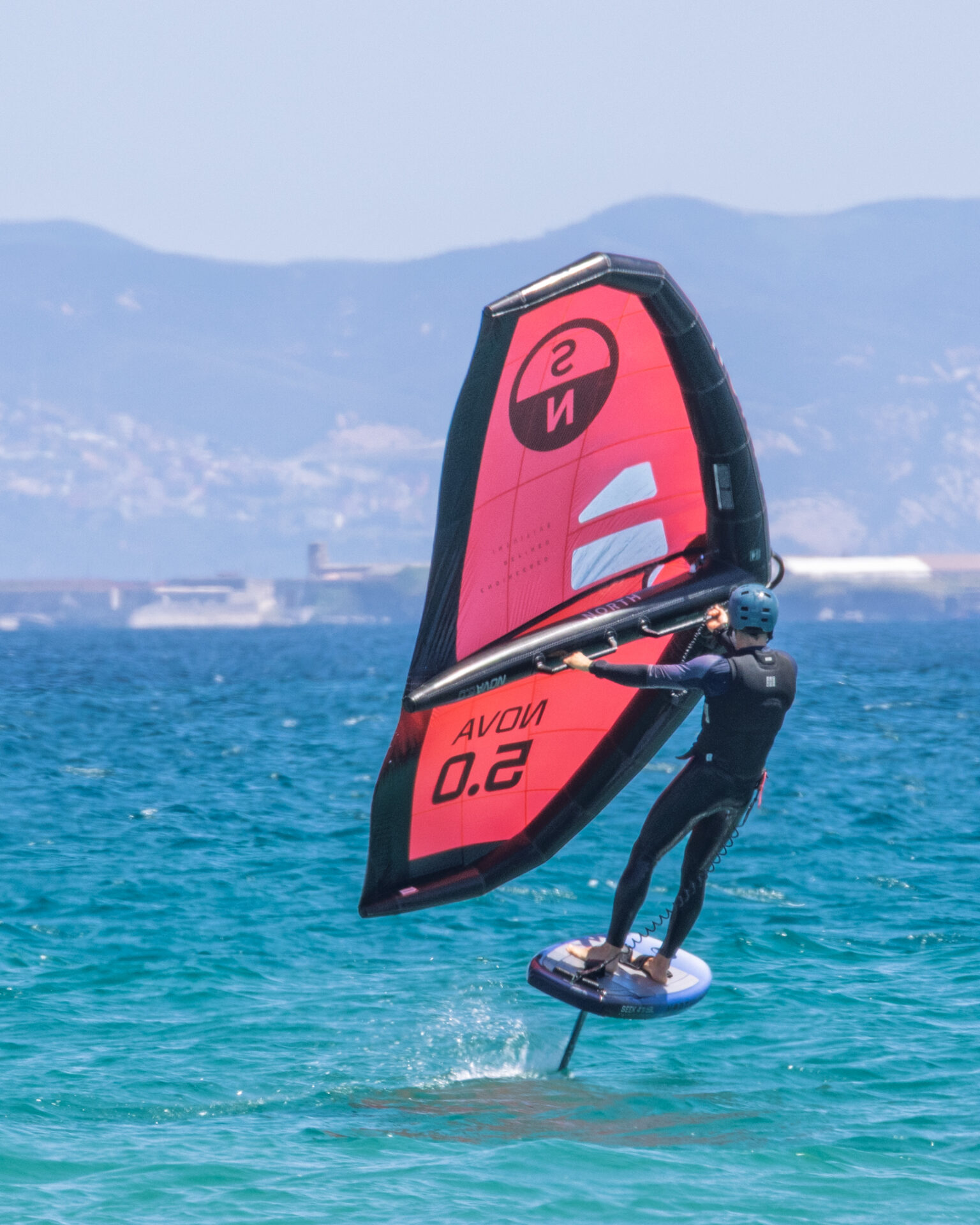
Kite Surfing is immensely popular in Tarifa, its position near the straights of Gibralter guarantee brisk winds all the year around and the juxtaposition of golden sands, emerald seas, the colourful kites against a clear blue sky with Africa in the background make for a compelling spectacle.
Table of Contents
Video
Shooting Unpredictable Fast Moving Objects

To get into the detail, kite surfers are often travelling at speeds anywhere between 12 and 40 mph in unpredictable directions so I needed to take a lens that would compress the distance and focus fast, along with a camera that would hold focus reliably. I chose the Canon EF 70-300mm f/4-5.6L IS and the Canon EOS R7. Noting that changing lenses on a windswept beach would be impractical to put it mildly.

Camera Choice
The Canon R7 is the mirrorless upgrade to the old Canon 7D, it comes with considerable capability. It has a 32.5 megapixel APS-C sensor, upgraded Dual Pixel CMOS AF II and in-camera IS. Burst mode can handle up to 15fps continuous shooting, 30fps in electronic shutter mode. This camera should guarantee sharp images as long as the shutter speed is sufficient, with the added bonus that the APS-C sensor will make my longest effective focal length 480mm from 300mm (multiply by 1.6).
Note: The way this crop factor multiplication works is that the entire image produced by the 70-300mm lens overlaps the sensor quite considerably. So, the sensor records the central part of the image, however the output, ie. the photograph is the same size as one from a full frame camera so the detail is magnified. Things in the distance appear closer. This is exactly the same effect as cropping.

Shooting Mode
For a change and because my normal landscape settings wouldn’t cut it in this fast moving environment, I decided to shoot in shutter speed priority, aiming for 1/350 sec, reasoning that it was a bright clear day so ISO could be relied upon not to exceed 100 and as I was shooting moving people attached to surfboards and kites, the aperture was a secondary consideration. I switched subject tracking on in camera, set to people. Servo AF set to Case 2, ie. Continue to track subjects ignoring possible obstacles.
Focus and Metering
These setting seemed sensible. I used spot focus and evaluative metering as there was so much going on in the frame and I wanted to have a good all round exposure so that I could accentuate the point of focus in post. What this meant in practice was lifting the shadows on the subjects as they were dressed in black wetsuits. As the subject was the darkest thing in the frame, I didn’t want to use spot metering for fear of overexposing the highlights. I don’t have enough experience of the camera or this style of shooting to know where the limits are.
Lens choice
I used the Canon EF 70-300mm f/4-5.6L IS with an EF-RF adapter. I don’t think it makes any practical difference although I haven’t compared it to the output of the RF equivalent. I’m happy with the images, shot hand held these look sharp to me and that’s probably enough!

One of the hardest aspects of this shoot, given that I had deployed the best of the equipment I had to hand was composition. The seascape is chaotic with probably as many as 100 surfers, wind surfers, kite surfers all operating in a relatively small patch of sea and air. I shot more than 200 frames in an hour and less than twenty were keepers. Not because of loss of focus, although that certainly happened on a few shots, but because of the unpredictability of the surfers. Almost impossible to avoid shooting surfers criss crossing in the water, and it was poor composition that caused be to jettison well over 60% of the images.
Lessons learned
Given that I’m used to shooting landscapes is this most fast moving of sports needs excellent camera technique – I fell short on a few shots through inadvertently locking focus instead of allowing the camera to track focus. The location itself could be shot in a couple of hours and then the surfers would need at least another couple of hours and a lot more shots. On this occasion there weren’t that many skilled kite surfers in evidence, but when the pros get going,
Sunset on this beach would be interesting and next time I go I’ll allow more time in the evening.
Subscribe…
I’ll keep you in the loop with regular monthly updates on Workshops, Courses, Guides & Reviews.
Sign up here and get special prices on all courses and photowalks in 2026